
OECD projects
OECD projects are classified as Category A, B or C depending on their sustainability risk. For Category A projects, a summary of the Environmental and Social Impact Assessment (ESIA) is published at least 30 days before Eksfin makes its final decision.
Our projects
OECD Projects Pending Review
OECD projects are published here at least 30 days before Eksfin makes a financing decision. The relevant environmental and social impact assessment can be accessed via the ESIA link.
| Project | Eksfin Involvement | Sector | Country | OECD Risk | Year | ESIA | Deadline for comments |
|---|---|---|---|---|---|---|---|
| Energy Valley | Guarantee | Solenergi og batterilagring | Egypt | A | 2026 | Link | 4.11.26 |
| Greater Changhua 2 | Wind power | Taiwan | A | 2025 | Link | Closed | |
| Hai Long | Guarantee | Wind power | Taiwan | A | 2022 | Link | Closed |
| Sakarya | Gas Field | Turkey | A | 2022 | Link | Closed | |
| Vissim | Guarantee + loan | ICT | Benin | B | 2022 | Closed | |
| Doggerbank A+B | Guarantee + loan | Wind power | Great Britain | A | 2021 | Link | Closed |
| Doggerbank C | Wind power | Great Britain | A | 2021 | Link | Closed | |
| Seagreen | Guarantee | Wind power | Great Britain | B | 2020 | Closed | |
| Changfang Xiadao | Guarantee | Wind power | Taiwan | A | 2020 | Link | Closed |
| Ningbo | Guarantee + loan | Aquaculture | China | B | 2020 | Closed | |
For comments, please contact sustainability@eksfin.no.
Recent transactions
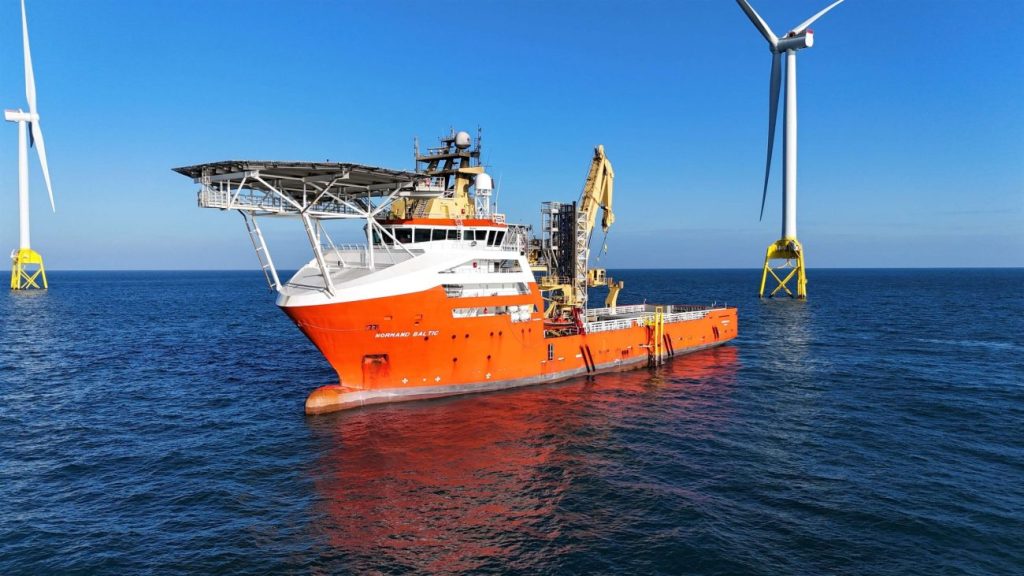
Eksfin finances NOK billion‑scale exports to the Greater Changhua 2 Offshore Wind Farm in Taiwan
The risk classification is based on the OECD Common Approaches and the Equator Principles. Through a risk-based approach, we adapt our requirements to the level of risk and the potential adverse impacts of each project. We place particular emphasis on risks within the supply chain.
High Risk
Category A
Projects that may have significant adverse environmental and social impacts, some of which may be irreversible. Certain impacts may be difficult to mitigate and may affect a wider area beyond the project site or facilities themselves. An illustrative list of such projects is provided in Annex I of the OECD Common Approaches.
Medium Risk
Category B
Projects with potential adverse environmental and social impacts that are less significant than those of Category A projects. Typically, these impacts are fewer in number, site-specific, largely reversible, and more readily addressed through mitigation measures.
Low Risk
Category C
Projects with a low risk of adverse environmental and social impacts. Eksfin requires a systematic approach to risk identification and risk management. These are typically projects located in Norway or deliveries to existing facilities.
Please Note
Please note that exports to existing facilities may still be associated with a higher level of risk if:
– The facility is located in or near protected areas.
– The facility has a significant environmental footprint, or operates in a country with significant challenges related to labour rights and working conditions.
– An Environmental and Social Management Plan (ESMP) is required.
– Eksfin and/or approved representatives conduct a site visit to the project.
– A project description, including a link to the Environmental and Social Impact Assessment (ESIA) and/or a non-technical summary, is published on Eksfin’s website at least 30 days prior to Eksfin’s final decision.
Documentation Requirements for Category A and B Projects
For projects with high or medium potential risk, Eksfin may require the following documentation:
| Category A exceeding NOK 100 Million | Category A below NOK 100 Million and Category B | |
|---|---|---|
| Documentation Requirements | ||
| Documentation of a systematic approach to identifying and managing risks | Yes | Yes |
| Environmental and Social Impact Assessment (ESIA) in accordance with the IFC Performance Standards | Yes | Yes, for high-risk projects |
| Climate Risk Assessment in accordance with the Equator Principles | Yes | No |
| Action Plan in accordance with the IFC Performance Standards | Yes | Yes, for high-risk projects |
| Eksfin’s Monitoring | ||
| Eksfin conducts site visits | Yes | Yes, for high-risk projects |
Contact us
Do you have any questions?
Please contact us if you have any questions about risk classification or the requirements that apply to the different risk categories.
Senior Sustainability Adviser
Senior Sustainability Adviser

Senior Sustainability Adviser
OECD-prosjekter
OECD-prosjekter kategoriseres som A, B eller C avhengig av bærekraftsrisiko. For prosjekter i kategori A publiseres et sammendrag av konsekvensutredningen (ESIA) minst 30 dager før endelig avgjørelse i Eksfin.
Våre prosjekter
OECD-prosjekter for innspill
OECD-prosjekter annonseres her minst 30 dager før Eksfin gjør vurdering om finansiering. Aktuell risikovurdering finner du via ESIA-linken
| Prosjekt | Eksfin involvering | Sektor | Land | OECD Risk | År | ESIA | Frist innspill |
|---|---|---|---|---|---|---|---|
| Energy Valley | Garanti | Solenergi og batterilagring | Egypt | A | 2026 | Link | 4.11.26 |
| Greater Changhua 2 | Vindkraft | Taiwan | A | 2025 | Link | Lukket | |
| Hai Long | Garanti | Vindkraft | Taiwan | A | 2022 | Link | Lukket |
| Sakarya | Gassfelt | Tyrkia | A | 2022 | Link | Lukket | |
| Vissim | Garanti + lån | IKT | Benin | B | 2022 | Lukket | |
| Doggerbank A+B | Garanti +lån | Vindkraft | Storbritannia | A | 2021 | Link | Lukket |
| Doggerbank C | Vindkraft | Storbritannia | A | 2021 | Link | Lukket | |
| Seagreen | Garanti | Vindkraft | Storbritannia | B | 2020 | Lukket | |
| Changfang Xiadao | Garanti | Vindkraft | Taiwan | A | 2020 | Link | Lukket |
| Ningbo | Garanti + lån | Akvakultur | Kina | B | 2020 | Lukket | |
Kontakt sustainability@eksfin.no ved innspill
Nylige transaksjoner
Eksfin finansierer norsk milliardeksport til Greater Changhua 2 havvindpark i Taiwan
Risikokategoriseringen er basert på OECD Common Approaches og Ekvator Prinsippene. Med en risikobasert tilnærming tilpasser vi kravene til risiko og grad av mulig negativ påvirkning. Vi har et særlig fokus på risiko i leverandørkjeden.
Høy risiko
Kategori A
Prosjekter som kan ha betydelige negative, kanskje irreversible, miljømessige og sosiale konsekvenser. Noen av konsekvensene kan være vanskelig å avbøte og de kan påvirke et større område enn selve anleggsområdet/fasilitetene. En illustrerende liste er lagt ved i Anneks 1 til OECD Common Approaches.
Middels risiko
Kategori B
Prosjekter der mulige, negative miljø- og sosiale konsekvenser er mindre enn i kategori A. Typisk vil det være færre konsekvenser, knyttet til et definert område, og få om noen er irreversible, samt at avbøtende tiltak er mer tilgjengelige.
Lav risiko
Kategori C
Prosjekter med lav risiko for negativ påvirkning på miljø og sosiale forhold. Eksfin vil kreve en systematisk tilnærming til risikoidentifisering og håndtering. Dette er typisk prosjekter i Norge og leveranser til eksisterende anlegg.
Merk deg dette
Merk at eksport til eksisterende anlegg likevel kan ha høyere risiko hvis:
– anlegget er lokalisert i, eller i nærheten av, vernede områder.
– anlegget har et betydelig miljøfotavtrykk, eller det opererer i et land med betydelige utfordringer innen arbeidsrett og arbeidsforhold.
– Plan for avbøtende tiltak relatert til miljø og menneskerettigheter
(ESMP – Environmental and Social Management Plan).
– Eksfin og/eller godkjente representanter foretar en fysisk befaring av prosjektet.
– Prosjektbeskrivelse med link til konsekvensutredning og/eller et ikke-teknisk sammendrag på Eksfins hjemmeside minst 30 dager før endelig avgjørelse i Eksfin.
Krav til dokumentasjon knyttet til kategori A og B
For prosjekter med høy og middels potensiell risiko kan vi stille følgende krav:
| Kategori A over mNOK 100 millioner | Kategori A under mNOK 100 millioner og kategori B | |
|---|---|---|
| Krav til dokumentasjon | ||
| Dokumentasjon på systematisk tilnærming til risikoidentifikasjon og håndtering | Ja | Ja |
| Konsekvensutredning henhold til IFC Performance Standard | Ja | Ja hvis høy risiko |
| Klimarisikovurdering i henhold til Ekvatorprinsippene | Ja | Nei |
| Tiltaksplan i henhold til IFC Performance Standard | Ja | Ja hvis høy risiko |
| Eksfin sin oppfølging | ||
| Eksfin gjør befaring | Ja | Ja hvis høy risiko |
Kontakt oss
Har du spørsmål?
Ta kontakt om du har spørsmål til klassifisering i risikokategori og krav knyttet til risikokategoriene.
Senior Sustainability Adviser
Senior Sustainability Adviser
Senior Sustainability Adviser